
Research
Primary areas of research by our team
Our research investigates the ecological and evolutionary mechanisms that generate and maintain biodiversity across time and space, and using the findings to predict how plant communities will respond to environmental changes driven by habitat loss, invasions, and climate change. Biodiversity encompasses multiple dimensions, including genetic, phylogenetic, functional, taxonomic, and ecosystem levels; therefore, our research lab collects and integrates various types of data originating from biological collections and laboratory methods, ecological, geospatial and climatic data from short- and long-term field surveys, experimental studies, and remote sensing. This demonstrates a highly integrative and interdisciplinary research scholarship that ensures holistic understanding of the origin and maintenance of biodiversity based on wide suite of ecological and evolutionary quantitative methods and theoretical modeling.
Our research can advance the scientific understanding of the diversification, distributions, and diversity of plants across spatial and temporal scales. Key findings from our research can also be used for protected area designs and creation, land management practices to reduce or prevent biological invasion, and conservation of the critical habitat of threatened species. Our lab works in various parts of the world. We have active research studies in West Africa, Southern Africa, and North America, as well as global studies

Research themes
Community ecology
Community phylogenetics
Spatial phylogenetics
Climate change ecology
Invasion ecology
Niche theory
Biogeography
Conservation biology
Traditional ecological and ethnobotanical knowledge
Active research studies
Trait diversity – a novel phylogenetic diversity measure of the spatial patterns of trait evolution
Spatial phylogenetics of the African spermatophytes and pteridophytes
Phylogenetic and functional diversity and biogeography of the pan-African Cola
Ecological and evolutionary drivers of plant diversity in Afrotropical rainforests and Pleistocene glaciation refugia
Effects of phylogenetic community structure and climate on temporal beta diversity, resilience, and stability of long-term ecological sites (e.g., NEON, RMBL, national parks, and forests)
Conservation prioritization of North American flora using phylogenetic diversity and endemism measures
Temporal variability in functional traits and performance of alpine plants along elevational gradients in Yosemite National Park, California
Niche dynamics of invasive species between native and invasive ranges, and impacts on biological control projects
Drivers of species distribution vs. abundance models of a U.S. federally threatened plants
Research topics

-
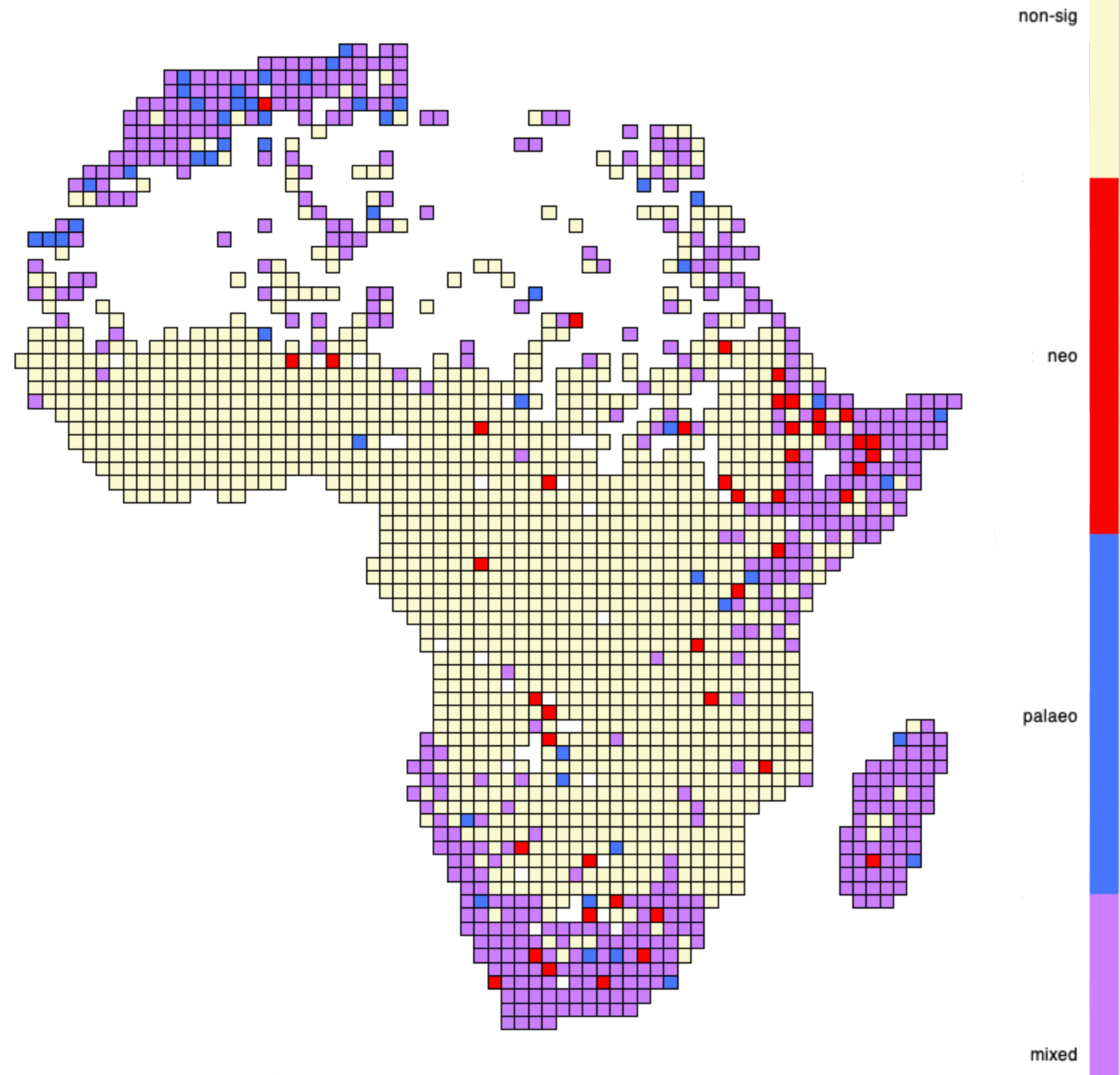
Plant assemblages at local to global scales are shaped by various ecological factors and deep time evolutionary and biogeography events, therefore unraveling the mechanisms of current diversity and diversification requires integrative ecological and phylogenetic approach. Spatial phylogenetic methods integrate geospatial, ecological, and phylogenetic data to map biodiversity patterns and identify potential factors driving such patterns and hypotheses that can be tested using empirical studies while also generating information that can be used to inform conservation actions.
This study seeks to investigate the ecological and evolutionary mechanisms of plant diversity in Africa and adjacent oceanic islands. Using a chronogram phylogeny, we will map phylogenetic alpha and beta diversity measures, identify centers of neo- and paleo-endemism, and fit spatial autoregressive models to detect abiotic predictors associated with observed spatial biodiversity patterns. With over 1.8 million occurrence records representing more than 50,000 plants, we can estimate phylodiversity patterns on the continent.
A similar study is being conducted using the North American flora comprising 18,000 floras to conduct conservation gap analysis for conservation prioritization and new protected area designs. -
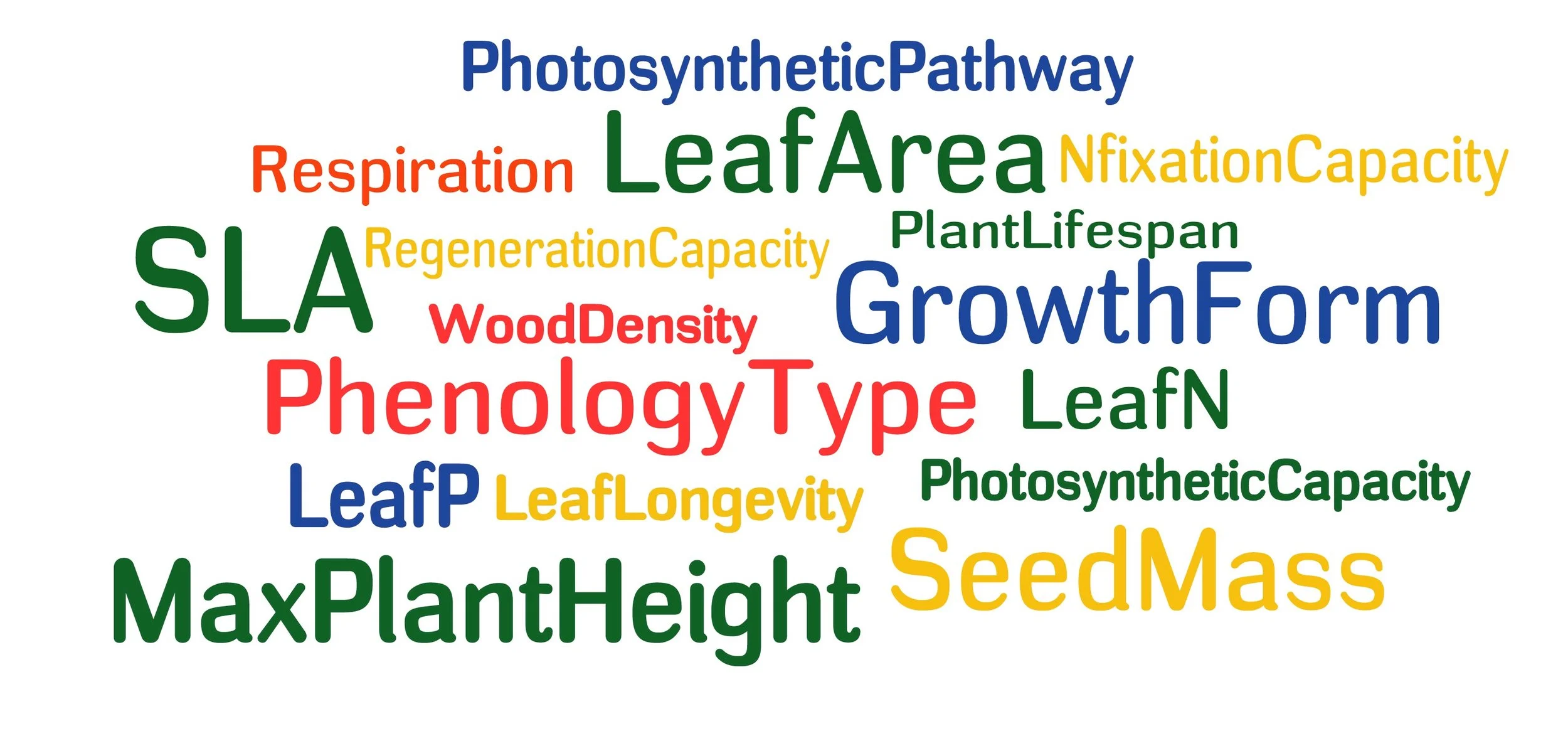
Community ecology theory predicts that species assemblages are shaped by the ability of taxa to tolerate prevailing abiotic factors, coexist with other species due to favorable biotic interactions, and their dispersal capacity to reach such locations. Functional traits have been identified as being central to these three drivers of community assembly – traits shape species’ environmental tolerance, biotic interactions, and dispersal capacities. Therefore, integrating traits in phylogenetic framework will improve the understanding of eco-evolutionary history of plant diversity, especially the “ghosts of past biotic interactions” that may impact current biodiversity patterns. Leading a group of several collaborators across the U.S. and Australia and building on spatial phylogenetic tools, I am developing a new metric that combines phylogenetic diversity and trait diversity to explain mechanisms of biodiversity, using Florida flora as a case study.
-
Biogeography theory predicts that under climate change, species will either migrate, adapt, or go into extinction. However, species’ responses to climate change vary in different taxonomic groups and different ecosystems, which makes generalizations of the effects of local and global changes on complex biological communities nontrivial. The effect of climate change on biodiversity is studied broadly in two ways: ecological modeling and biological monitoring. The former includes the use of species distribution models (SDMs) to explain species-climate relationships which are then mapped in geographical space as the species’ potential niche and extrapolated into new time based on future climate models.
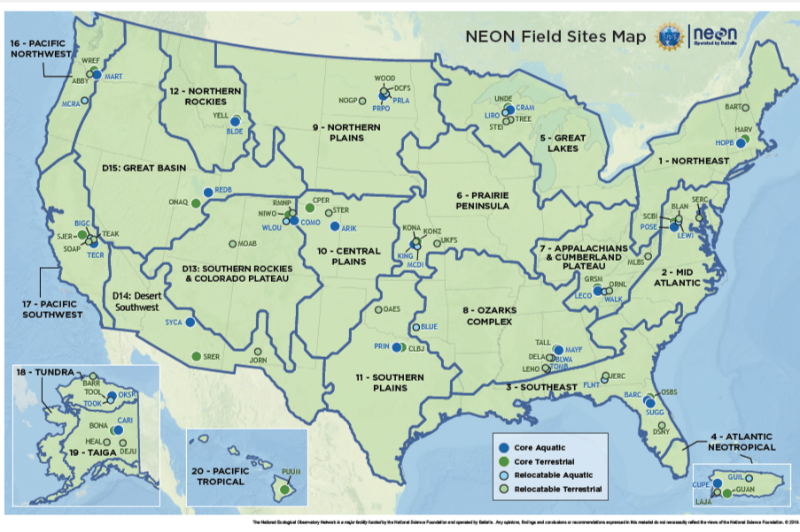
However, SDMs are limited in their application to understanding how biodiversity will respond to climate change, as they do not account for intraspecific trait variability and genetic diversity that can mitigate climate stress and facilitate adaptation to ecological stress, explicitly model dispersal or landscape permeability and resistance; thus, it is not guaranteed that a species can effectively track suitable climate. A more reliable way to assess species and community responses to climate change is long-term biological monitoring. Repeated surveys and recorded field observations across different ecological regions can be used to investigate the ecological integrity and resilience of biological communities and ecosystem processes under disturbance and climate change. In this current research, my lab is investigating temporal beta diversity and ecological resilience of over 1105 1 m2 plots distributed in 20 sites managed and monitored under the National Ecological Observatory Network (NEON). These temporal beta diversity measures are regressed against several biotic and abiotic factors to test ecological hypotheses and unravel the drivers of change in these sites.
-
Species distribution modeling (SDMs) have been widely used to describe species ecological niches, identify contributory factors, map suitable habitats and also predict future range size changes of target species. However, SDMs are fitted using occurrence records, representing a species realized niche, which is a small portion of the areas and abiotic niche associated with a species physiological tolerance and persistence; therefore, future predictive SDMs underestimates a species tolerance to the changing climate. Consequently, empirical evidence at population and community levels does not support the popular hypotheses of latitudinal and elevational species range shifts due to climate change. In this current work, funded by NASA EPSCoR grant, my research lab will grow Gentianopsis thermalis collected from three populations, thus capturing local adaptation and functional diversity, in extreme thermal conditions in growth chamber and evaluate their tolerance using plant biomass and other performance measures. Thermal tolerance results will be combined with occurrence records, representing the realized niche, to quantify the fundamental niche of the species which will be used to model the species distribution and predict future climate-induced range shifts.
-
Invasive species are among the top three drivers of biodiversity loss at local and global scales. These species have been deliberately or accidentally introduced to novel areas, and have naturalized and colonized new areas with significant economic and ecological impacts. Up to 33 ecological theories and hypotheses have been postulated to explain the drivers of successful invasion, which are applied for management and preventive measures. These theories focus broadly on two main aspects: (a) the traits possessed by invasive species that enhance their invasion successes in novel areas, and (b) the invasilibility of plant communities to invasion. Our lab documents the spatial distributions of invasive species, and tests the predictions of niche theory to investigate abiotic and anthropogenic drivers of invasion successes, calculate the degree of niche conservatism and similarity between native and invasive habitats of invasive species, and use species distribution models to predict future invasion risks. We also identify functional traits associated with invasive species which can be used to predict future invaders.
For a full list of research data, visit my Knowledge Network for Biocomplexity database